
Building a Modern Enterprise Risk Program: From Reactive to Proactive
Blog post description.
8/13/20252 min read
The Shift to a Dedicated and Integrated Approach
An effective enterprise risk program is not just a function of a process; it is a dedicated and integrated orchestrator of activity with a formal reporting structure. The maturity of a company's ERM program can be influenced by industry and regulation. Companies in highly regulated sectors like financial services and healthcare often have a more dedicated approach.
Key drivers for maturing a risk program include:
High operational and cyber risk
Board demands and the need for a competitive edge
The desire for cross-functional awareness and a global supply chain
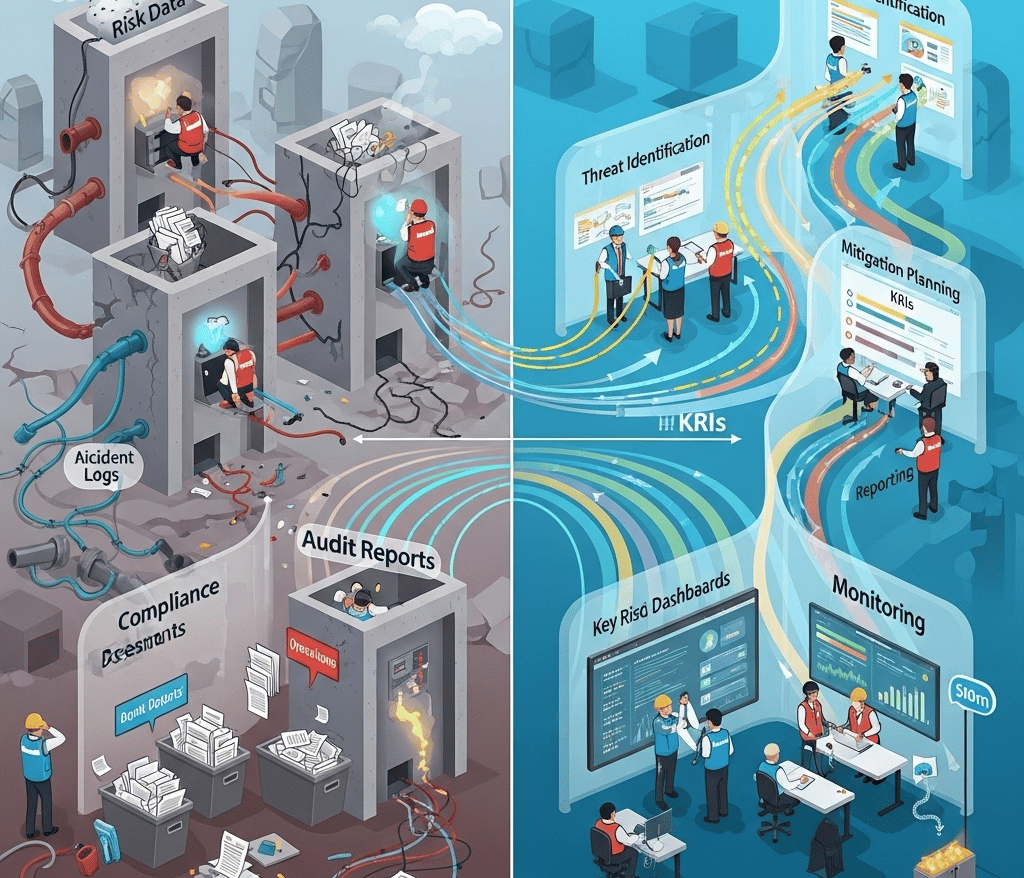
The Integrated Risk Management Lifecycle
A modern risk program follows a continuous lifecycle, which includes:
Establishing Context: Aligning risk management with business objectives.
Risk Identification: Identifying and categorizing potential risks across business operations, finances, and compliance. This can be done through surveys, expert panels, and historical data analysis.
Risk Evaluation: Analyzing the likelihood and impact of identified risks. This helps in prioritizing risks, often visualized using risk heat maps.
Risk Treatment: Developing and applying controls to reduce or transfer risk. This can involve implementing preventive controls like security firewalls or transferring risk through insurance and third-party vendors.
Risk Monitoring & Reporting: Continuously tracking risk levels and reporting updates to leadership. This is often done using automated dashboards and periodic audits.
By implementing this integrated approach, organizations can move beyond a reactive, compliance-driven mindset to a business-enabling strategy that fosters collaboration and drives growth. A strong foundation in enterprise risk management provides top-down and bottom-up visibility, enabling better decision-making and improved organizational performance.
In today's fast-paced business world, managing risk effectively is no longer a "nice-to-have" but a critical component of building a trustworthy and successful organization. Many companies are still stuck in a reactive mode, dealing with risk in silos and relying on outdated, manual processes. This often leads to inefficiency, errors, and a lack of coordination across departments.
The good news is that there's a better way. By building a modern, integrated enterprise risk program, you can move from simply managing compliance to using risk to unlock new opportunities and drive business growth.
The Challenge of a Siloed Risk Landscape
Many organizations face common hurdles when it comes to risk management:
Siloed Activities: Different departments (Finance, HR, Security, etc.) handle their own risks separately, leading to a loss of efficiency.
Manual and Redundant Processes: Relying on spreadsheets and emails creates shadow workflows, which increases the opportunity for errors and points of failure.
Poor Adoption: Inconsistent processes can lead to disengagement among users and contributors, hindering the program's effectiveness.
Only 45% of surveyed executives believe their boards have "good" or "excellent" risk management expertise, highlighting a significant gap in many organizations.
Contact US
Leave your email for business contact, we will reach out to you asap!
info@tir-advisory.com
+66 95 582 9976
© 2025 by TIR Advisory Co. Ltd. All rights reserved.